
Module aims
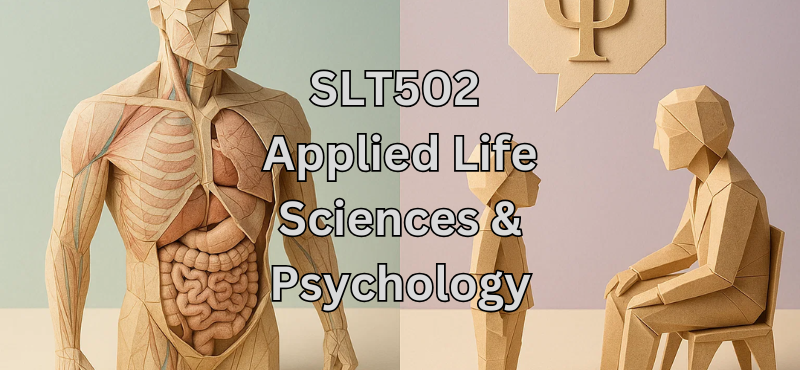
You will build on your learning from ‘Essential Psychology’ and ‘Introduction to Life Sciences’ at Level 4 and will begin to apply these respective but related disciplines to the remit of SLT.
You will not only consider the anatomical and physiological basis for varying conditions, but you will reflect on the psychological impact and how this determines and impacts upon person led care. This will be brought to life with case-based discussions.
Assessment and intervention approaches will be considered both from a SLT perspective and that of the wider multi-disciplinary team.
Social and cultural factors to SLT practice will also be reflected upon.
You will reflect on the therapeutic relationship and your professional duty to maintain high standards even when there is resistance or are incompatibilities
Module learning outcomes
1 | Identify and explain the anatomy and physiology of the vocal tract, ear, nose and throat including typical and atypical lifespan changes.
|
2 | Identify and explain the neuroanatomy, neurophysiology and the limbic system with relevance to control of speech, language, hearing, swallowing, motivational states, emotional behaviour, learning and memory |
3 | Identify and explain key psychological theories as relevant to SLT practice. |
4 | Apply theory from anatomy, physiology and psychology to inform case management in professional practice.
|
- Course Leader: Nick de Mora-Mieszkowski
- Teacher: Karen Leadbitter
- Teacher: Ffion Roberts
- Teacher: Lauren Salisbury
- Teacher: Thomas Starr-Marshall
- Teacher: Katy Williams